

Accounts in Transit: August Backs Broadwood Partners in Winning Proxy Fight

From Division to Direction: Ethereum’s Leaders Rally Behind ETH’s Economic Story
Our team recently supported the Ethereum community’s development, announcement, and promotion of its report, The Bull Case For ETH: Digital Oil, Store of Value, and Global Reserve Asset for the Digital Economy. The report, which examines the likely role and importance of Ethereum’s ETH asset in the future global economy, was spearheaded by Etherealize (Ethereum’s recently formed, institutional-investor-focused marketing and education arm) and promoted by Ethereum’s co-founders Vitalik Buterin and Joe Lubin, the Ethereum Foundation, and Coinbase’s Ethereum Layer-2 network, Base. The shared effort in developing the report and collective support of these key leaders quietly signaled a notable heel turn for some of Ethereum’s biggest names. For years prior to the report, in-fighting among the Ethereum community was rampant – with community members split on whether the leaders of Ethereum should remain focused on perfecting the technology behind the platform or allocate more of their resources to increasing global institutional and investor interest in Ethereum and its ETH asset. This in-fighting reached a fever pitch over the past year, as ETH’s price growth lagged far behind that of Bitcoin, despite several major technological upgrades and scaling breakthroughs. Ethereum’s leaders’ support for the “Bull Case for ETH” report was noteworthy because it marked the first time they have joined together to promote ETH’s economic value, indicating that the in-fighting may be coming to an end. The decision to present a unified front and focus on education, coupled with the U.S.’s growing focus on implementing legal frameworks for responsible and sustainable blockchain innovation (as evidenced by the Senate’s passing of the GENIUS act last week), suggests that an Ethereum renaissance may be around the corner – with the potential for the platform to usurp Bitcoin’s and stablecoins’ current stranglehold on the mainstream crypto conversation. The Ethereum community’s newfound narrative alignment has also coincided with a substantial uptick in Ethereum-based projects looking for support in seeding a broader narrative about the platform’s potential role as a foundational layer of global finance 2.0 and its value to forward-looking financial institutions. We expect this trend to continue in the coming months and believe the projects that can effectively insert themselves into this conversation and demonstrate their role in accelerating the adoption of Ethereum stand to benefit greatly. We encourage anyone interested in digital assets to keep an eye on this narrative, as we expect it to become a focal point of the global crypto conversation alongside growing chatter around stablecoins.

Nuggets of Wisdom: Comparing the Responses of Boar’s Head and McDonald’s to their Respective Food Safety Recalls
By Nate Johnson, Managing Director News broke on Tuesday that an E. Coli outbreak linked to McDonald’s’ popular Quarter Pounder hamburger led to the death of one person and sickened at least 48 across ten states, sending the company’s PR machine into overdrive. So far, McDonald’s has handled the situation about as well as any organization in its position could hope to. Given our critique earlier this week of Boar’s Head’s mishandling of its recent listeria outbreak, we wanted to explore why and how McDonald’s has been more successful in mitigating damage to its brand under nearly identical circumstances. Takeaways Choosing the right communications channel Boar’s Head’s initial communications consisted of a highly technical press release and a boiler plate media statement that Boar’s Head was “cooperating fully with government authorities and conducting [its] own investigation into this incident,” neither of which was effective in connecting with stakeholders or putting them at ease. In contrast, McDonald’s disclosed the news by cross-posting a brief but detailed internal employee note to its corporate blog that included a video address from McDonald’s USA President Joe Erlinger. This made for a much more accessible and compelling first communication that focused on conveying the most important details in a digestible, human manner. Where Boars’ Head’s press release felt overwhelming and overly corporate, reading like the disclosures segment of a prescription drug advertisement, McDonald’s communications were sharp, to the point, and used channels and formats that were more familiar and comfortable to their target audience. Anchoring response in corporate values Boar’s Head’s initial press release disclosing the recall was over 1000 words long, and yet none of those 1000 words indicated how the company felt about the recall, or how it fit within the context of the company’s values. Granted, this press release did follow a format required by the USDA, but the company could have supplemented it with additional communications that more clearly articulated their position on the incident. Instead, their data dump release left customers wondering whether the company’s health code violations were just par for the course for an organization that made no mention of prioritizing food safety or the well-being of its customers. McDonald’s, on the other hand, started with their values. The first two lines of their cross-posted internal message read: “Across the McDonald’s System, serving customers safely in every single restaurant, each and every day, is our top priority and something we’ll never compromise on. It is why we are taking swift and decisive action following an E. Coli outbreak in certain states.” McDonald’s made clear the outbreak was directly at odds with its corporate principles and that its rapid response was driven by a desire to uphold those principles, eliciting comments like the below on Joe Erlinger’s video address: Taking ownership In responding to the listeria outbreak, Boar’s Head has not attributed its statements or communications to a specific spokesperson. Even the customer letter that the company issued a month after the initiation of the recall was signed by the company, rather than the CEO or another corporate leader. McDonald’s attached two credible spokespeople to its crisis. North America Chief Supply Chain Officer Cesar Piña was listed as the author of the internal message, and USA President Joe Erlinger appeared in the video. By positioning two leaders front and center and having them take ownership of the incident, the company’s response came across as much more genuine than Boar’s Head. Humans connect better with one another than they do with brands, so assigning a leader to be the face of a company’s crisis response – someone who does not skirt responsibility or make excuses – can be an effective means of rebuilding credibility with consumers. Communicating empathy This was perhaps the only category in which McDonald’s joined Boar’s Head in falling short. As in Boar’s Head’s case, McDonald’s initial communications failed to express empathy for those who have so far been impacted by the outbreak, including the individual who died after contracting E. coli. As we speculated in our article regarding Boar’s Head, this may stem from concerns that an expression of empathy could be interpreted as an admission of guilt and carry legal liability. However, we believe there are ways to communicate empathetically without admitting fault, and it felt strange for McDonald’s to emphasize its values so aggressively without ever mentioning the impacted individuals. This sentiment was even raised by one commenter on Joe Erlinger’s video: A little can go a long way – even a simple, “We are aware of the reports of individuals falling ill from E. Coli and want to share our heartfelt sympathies to those suffering from this terrible illness” would help offset any perception that McDonald’s response was heartless or lacking in empathy. Looking ahead At this stage, the score card is clearly in McDonald’s favor, as it bested Boar’s Head in all but one of the above categories. However, it can take months for a crisis of this magnitude to play out, with many more opportunities for missteps. It remains to be seen whether McDonald’s can maintain the largely positive momentum from its initial response, or if the situation will worsen and make long-term reputational harm all but inevitable. To avoid further damage, it is critical that McDonald’s clearly communicates its final findings regarding the source of the outbreak, as well as the steps it is taking to ensure that another, similar outbreak does not occur in the future.
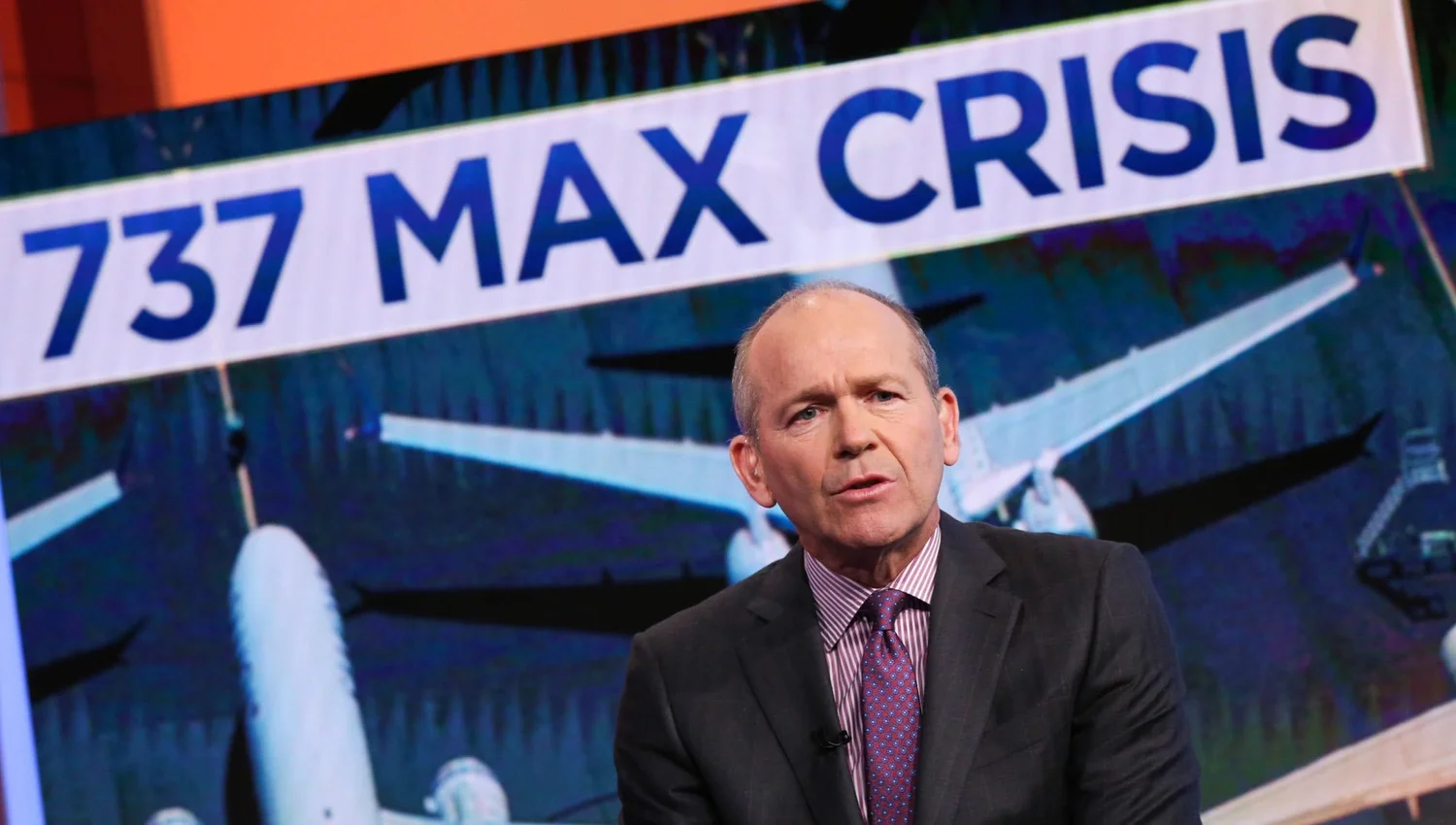
The “Resignation” of Boeing CEO David Calhoun
By Allowing Calhoun to “Step Down,” Boeing Missed a Critical Opportunity to Signal the Company is Serious About Making Changes In a shock to no one, Boeing’s President and CEO David Calhoun announced last week that he will step down from his role at the end of 2024 – prompting reactions ranging from, “Well, obviously,” to, “It’s about time!” Boeing’s leadership change may have been inevitable, but its announcement wasn’t without its share of surprises. Chief among them was Boeing’s decision to allow Calhoun to claim his departure was voluntary and deliberate. When “Stepping Down…” Isn’t Really Stepping Down When a CEO “steps down” in the wake of a crisis, it is very rarely by choice. Leaders don’t like ceding powerful positions, nor do they want to leave in shame. If an outgoing CEO’s departure is described this way, it usually means that the Board issued an edict forcing the CEO out, but, as a courtesy, allowed the CEO to claim that they left voluntarily. Calhoun’s “decision” to step down was likely no exception, given the severity of the crises that unfolded under his watch. It’s unclear why Calhoun was extended this courtesy. Sometimes it’s offered to the departing CEO as an olive branch to discourage retaliation and ensure a smooth transition. In other cases, it is offered because the members of the board have close personal relationships with the CEO. Contractual obligations can be a factor too. But regardless of what drove the decision in this case, letting Calhoun take credit for his own exit was almost certainly the wrong business decision for Boeing. Why Companies in Crisis Shouldn’t Let Their CEOs “Step Down” Following a crisis, making changes to the executive team is among the most effective steps a company and its board can take to demonstrate its commitment to addressing the company’s issues. When a board affords its departing CEO the “dignity” of a resignation, the company loses a critical opportunity to communicate its dedication to taking meaningful action to get back on track. Most people will recognize that “stepped down” is code for “fired,” so the missed opportunity may seem overstated. But consider how the sweetheart framing of Calhoun’s departure limited Boeing’s ability to capitalize on the news and reposition itself for the future. Boeing’s Missed Communications Opportunity Calhoun’s exit was presented in Boeing’s press release in a matter-of-fact manner, with barely any acknowledgement of the company’s recent struggles. The rationale for his departure was provided almost entirely by Calhoun himself in an employee note hyperlinked in the release, although to call it a rationale would be a stretch – he offered nothing more than a classically vague “…[it’s] the right time for a CEO transition at Boeing.” Neither Calhoun nor the company accepted accountability for the recent issues in either communication. In fact, Calhoun and chairman Larry Kellner, who concurrently announced his own “resignation,” took up significant real estate in the release patting each other on the back for their “tremendous leadership.” The efficacy of having a “fall guy” decreases significantly if nobody actually takes the fall. Additionally, neither the release nor the note included tangible actions that the company is taking to right the ship. Instead, the note was filled with empty platitudes like, “We must continue to respond to this accident with humility and complete transparency,” and, “We also must inculcate a total commitment to safety and quality at every level of our company” – words that ring hollow after years of safety failures. But, imagine if: Positioning Calhoun’s removal in this manner would likely have made stakeholders much more willing to believe that the company is committed to turning over a new leaf. Instead, it feels like we’re rewatching a movie we’ve already seen. Back in 2019, Boeing announced then CEO Dennis A. Muilenburg’s “resignation” in a similarly sparse press release following two fatal 737 max crashes. The déjà vu may make rebuilding credibility and trust even more of an uphill battle. Boeing Has Clipped its Own Wings By allowing Calhoun to “step down” and stick around until the next CEO is appointed at the end of the year, Boeing has forfeited its ability to meaningfully repair its reputation for at least the next eight months. Given Calhoun’s track record, it’s unlikely we’ll see significant change in the company’s practices in that time – but even if Calhoun did announce a strategic plan to right the ship, the public may not consider it to be indicative of the company’s future direction. They know that the new CEO may come in with an entirely different vision. Until then – and as more details regarding the disfunction at Boeing under Calhoun’s leadership emerge in the coming months – you can expect the company to remain grounded.

ESG Newsletter | Volume 05
Anti-ESG shareholder proposals and political attacks show no signs of slowing down into mid-2023. Some companies, executives, and investors are succumbing to this pressure – attenuating their ESG messaging in fear of stakeholder backlash – while others are doubling down on affirmative ESG communications. In this ESG newsletter, we explore the following themes against this backdrop: We hope you find these short synopses and our takeaways for companies and their communications teams helpful. As always, we welcome your comments and input at Inquiries@AugustCo.com. An End to the Movement, or Just the Acronym? How and When Should Companies Speak Out? The Materiality of “S” In ESG
ESG Newsletter | Volume 01
Introducing August’s ESG Newsletter For the first time in nearly 40 years, in 2019 the Business Roundtable issued a new statement on the Purpose of a Corporation, rejecting the principle of shareholder primacy in favor of one in which a corporation exists for the benefit of all stakeholders: customers, employees, suppliers, communities, and, last but not least, shareholders. This holistic perspective dovetails with the objectives of ESG – shorthand for Environmental, Social, and Governance – a broadly-defined movement intended to direct investor dollars towards companies that successfully pursue environmental, social, and governance-related initiatives. In recent years, ESG has created a whirlwind of challenges for, and debate among, corporate leaders who seek to balance stakeholders’ increasingly complex and often conflicting preferences. A central question in this debate is whether ESG considerations interfere with a company’s fiduciary duty to its shareholders or are an integral component in fulfilling that objective. Raising the stakes in this debate is the entry of federal and state political leaders with their own agendas. To some on the right side of the aisle, ESG is being framed as a dangerous product of “woke capitalism” that unfairly subtracts from the returns shareholders would otherwise be due and wrongly cedes American business leadership to a group of global elites; and to some on the left, it doesn’t go far enough to hold big companies and the wealthy responsible for negative externalities created by the relentless pursuit of profit. As pro- and anti-ESG pressure builds from investors, politicians, regulators, employees, consumers, and other stakeholders, companies across industries are grappling not only with how to incorporate ESG into their business models, but also with identifying effective measurement and disclosure methodologies. With no standardized reporting criteria and intense focus on ESG initiatives from corporate stakeholders, companies are highly vulnerable to claims that they have failed to align their ESG initiatives with their brands. And if their efforts are perceived as inauthentic, they risk rejection by consumers. It is becoming clear that how corporations communicate about their ESG commitments can be a stronger determinant of corporate value and reputation than the ESG initiative itself. Today, stakeholders increasingly expect corporations to provide open, transparent, and ongoing communications about their ESG initiatives and commitments, just as investors demand “proof” that these same programs produce lasting and tangible value. These concepts and conversations are what gave rise to this newsletter, in which we will spotlight some of the most important ESG-related developments and dissect what they mean for corporate leaders and their communications teams. We hope you enjoy and find value in it, and we welcome your feedback and the opportunity to discuss further. The Impact of the Midterms What The Midterms Mean for ESG Investing E&E News | November 11, 2022 Managing State Level Tensions ESG Regulatory Divide Poses Challenges for Asset Managers Wall Street Journal | November 28, 2022 The Importance of Action Before Words ESG Commitments Before ESG Communications (Not the Other Way Around) Forbes | November 9, 2022 The Case for Values in ESG It’s Time for ESG to Fight Back Barron’s | November 11, 2022 Applying the Financial Materiality Assessment Framework to ESG The Benefits of an ESG Materiality Assessment Forbes | November 1, 2022

Adidas & Ye: Better Late Than Never?
What we can learn from adidas’ response to Ye’s antisemitic rampage Adidas’ silence following antisemitic hate speech by Ye, formerly known as Kanye West, was the subject of significant and protracted media attention, snarky memes, and public scrutiny. By the time adidas issued its long-awaited statement and severed ties with Ye, the company had already suffered meaningful damage to its brand, reputation, and value, making for an instructive case study on why timing is crucial and every word matters. What Happened? On October 6, adidas put its Yeezy partnership on review just days following Ye’s use of “White Lives Matter” shirts during Paris Fashion Week, affirming that it would “continue to comanage the current product during this period.” Days later, the company was notably silent when Ye began to spread antisemitic hate on social media and in media interviews. In an October 16th podcast interview, the rapper even boasted: “I can say anti-Semitic things, and Adidas can’t drop me. Now what? Now what?” (this episode has since been taken down). For more than a week, adidas proved him right. Despite the ongoing controversy, the company released a new color-way for a sneaker in Ye’s eponymous Yeezy shoe line on October 23, two days before the company formally terminated the partnership, signaling – at best – a lack of coordination and alignment within the business and – at worst – intentional indifference to Ye’s hateful and dangerous statements. Legal, operational, and financial considerations likely constrained the speed at which adidas took action – particularly given the company’s tenuous financial situation; however, the significant delay suggests that the company did not have contingency plans in place for executing and communicating a separation from Ye – which is surprising and arguably irresponsible given the importance of the partnership to adidas’ business and Ye’s demonstrated volatility and penchant for unhinged, often offensive, public statements. It’s worth noting that the company faced uniquely high expectations to decry antisemitism immediately and unconditionally given its historical links to the Nazi Party. The company’s troubled past gave it all the more reason to affirm its values and attempt to undermine residual association between the company and antisemitism. More than two weeks after Ye began his antisemitic tirade, adidas finally took a stand – but only after: Too Little Too Late? The company released the following statement on October 25th: By waiting so long to comment or take action, and despite whatever careful consideration and “thorough review” adidas claims to have undertaken, the company unintentionally put itself in an unwinnable situation. The damage was done long before it made a statement, and even a world class response couldn’t have completely undone the reputational harm the company had already incurred by delaying comment for such an extended period. That said, a credible and authentic statement that took ownership of its missteps could have helped adidas save face and lay the groundwork necessary to begin repairing its image. Unfortunately, their statement fell short in a few key ways. What Didn’t Work “Immediately” The headline and body of the response state that the partnership was terminated “immediately,” an ironic framing for a company who was so widely criticized for its weeks-long silence. Instead of writing what was likely meant here, “effective immediately,” adidas made a glaring misstatement that signaled a lack of contextual awareness. “Does not tolerate” adidas also claimed that it “does not tolerate antisemitism and any other sort of hate speech,” and this is a strong and compelling message – if it’s true. But what do the company’s more than two weeks of silence represent, if not toleration of West’s behavior? When an organization states its values and claims to have zero tolerance policies for violations of those values, it must be prepared to follow through on its promises swiftly and decisively to maintain its credibility. The company also cited a “thorough review” that informed its decision to cut ties with Ye. But why – if Ye publicly, flagrantly, and repeatedly violated the company’s stated values of “diversity and inclusion, mutual respect and fairness” – did this decision require a thorough review And how does one reconcile this with the fact that the company “does not tolerate” hateful language or antisemitism? Conducting a “thorough review” is admittedly commonplace and typically considered a best practice when a company is determining how to respond to a crisis, but when an individual’s transgressions are so public and hateful – to the degree that almost no amount of context could possibly justify them – the benefits of acting quickly far outweigh anything that a detailed review might yield. Since there shouldn’t have been much else for the company to consider with regards to Ye’s actions, adidas’ “thorough review” language – taken together with its reference to its decision’s supposedly limited financial impact – suggests that the adidas team probably wasn’t just closely reviewing the rapper’s conduct during that period. We can only speculate, but the way the statement is framed makes it sound as though adidas may have been waiting to see the full extent of the blowback so it could more accurately weigh the business cost of severing ties with Ye against the ethical costs – raising significant questions about the authenticity of its supposed commitment to its stated values. As a whole, the statement leaves us wondering: What We Can Learn While it remains to be seen whether the damage to adidas’ reputation will endure, there are a number of lessons that other organizations can learn from this situation: A number of companies and organizations still have yet to cut ties with Ye – namely, major music streaming services – and are facing mounting pressure to do so. While some have commented on the situation or taken limited action, they should bear the above recommendations in mind when charting their paths forward.

August Response to Mass Shootings
As we head into a holiday weekend that honors and remembers those who died for our country, the team at August is feeling horror, grief, and anger about the spate of recent mass shootings across the country. We also remember and mourn for the innocent lives lost and the countless others affected by these senseless and abhorrent acts. There is an often-quoted (especially following the murders in Uvalde) tweet from 2015 by journalist Dan Hodges that reads: “In retrospect Sandy Hook marked the end of the US gun control debate. Once America decided killing children was bearable, it was over.” Indeed, much of the news coverage and commentary in the wake of Uvalde expressed a tone of resignation that nothing can change the unwillingness of our elected officials to bring about sensible changes to our gun control laws and protect innocent lives. We cannot succumb to the understandable feelings of helplessness. As Coretta Scott King so eloquently stated, “It doesn’t matter how strong your opinions are. If you don’t use your power for positive change, you are indeed part of the problem.” Over the last several days, we have been encouraged to see many prominent individuals and organizations speaking forcefully for change. Golden State Warriors head coach, Steve Kerr, whose father was tragically shot to death when Kerr was a teenager, was as forcefully outspoken as anyone about the need for elected officials – specifically Republican Senators – to respond to the will of the people and take legislative action to restrict access to deadly weapons. Gabe Kapler, the manager of the San Francisco Giants expressed similar passion and has decided for now that the will not take the field for the national anthem. And the New York Yankees – arguably the most famous franchise in the history of professional sports – joined with the Tampa Bay Rays to use their respective Twitter feeds to educate the public about gun violence. In boldly taking a stance, they are using their platforms to drive change. Each one of us can do the same. Even if we, as individuals, can’t reach as many people as Steve Kerr or the New York Yankees, each of us can be part of a groundswell of public opinion demanding, and ultimately achieving, meaningful action. And we must remember that there is an overwhelming majority of Americans who believe that what is right is taking various forms of legislative action to limit gun access and deter gun violence. In fact, 88% of Americans support universal background checks for all gun purchases and two-thirds of Americans support banning assault weapons. So, what can you do? Here are some suggestions and links to resources: 1. Vote. Every Senator, Congressperson, and Governor who ignores the undeniable logic of common-sense gun laws can be voted out of office and stripped of their power. If you want real change, then commit to voting for and supporting candidates who are in favor of meaningful changes to our federal and state gun laws. 2. Make your voice heard. Regardless of where you live, call your Senator, Congressional representative, and Governor and express your views, and encourage people you know to do the same 3. Use your financial power. As individuals, each of us can commit to not supporting companies that make contributions to politicians who accept money from the gun lobby and/or do not support legislation to help stop gun violence. And companies and other organizations can similarly make this type of commitment. 4. Donate (if you can) Support organizations that advocate for stopping gun violence, including Everytown for Gun Safety; Sandy Hook Promise; and Giffords. These organizations are making an impact even if it doesn’t seem like change is happening. 5. Volunteer. Each one of the organizations listed above can use support. Or you can volunteer to help candidates who are committed to passing gun control legislation. There is power in numbers. If we all do our part and trust that others will do the same, we can help to erode the gun lobby’s influence. Our firm hopes and believes that there is enough anger and passion now that companies and individuals will have a sense of collective responsibility to ensure that change happens. As for August, we are individually and as a firm making donations to each of the non-profit organizations that are listed above. We are committing to not supporting businesses or organizations that make contributions to or otherwise support the gun lobby. That is just our starting point. We will continue to advocate for change and support the effort to implement sensible gun control laws – because in following Coretta Scott King’s guidance we are using our small slice of power to help bring about positive change. It’s either that or be part of the problem.

August Launches as a Strategic Communications Advisory Firm
Download Press Release Los Angeles/New York – October 13, 2021 – August (“August” or the “Firm”) announced today its launch as a strategic communications advisory firm established on the core belief that excellence in client service is achieved when individuals with specialized talent and subject matter expertise are empowered to focus on what they do best. August will deliver thoughtful and tailored communications strategies with a multi-disciplinary approach built on the foundations of authentic narrative development, deeply analytical engagement, and diligent execution. August’s core practice areas reflect the experience of its professionals: “The world is becoming increasingly polarized, and now—more than ever—what, when, and how you communicate is critical to preserving and creating value and protecting reputation,” said Steven Goldberg, Chief Executive Officer. “We founded August on the conviction that the best way to achieve excellence in helping clients tell their stories during their times of greatest need is by cultivating a team with deep expertise and empowering individuals to do their best work. We are dedicated to creating an environment that offers our people fulfilling development and growth opportunities that will set them up for success in their professional careers and in their personal lives.” “I am excited to be joining this outstanding group of professionals who are committed to delivering results for clients that support business objectives, mitigate reputational harm, and preserve value,” said Ellen Davis, Senior Managing Director and Head of the Crisis and Litigation Practices. “I have had the privilege of honing my skills as a strategic advisor alongside some of the most talented practitioners in the business, and this new firm represents an opportunity for me to deploy those skills in a collaborative environment that will draw upon each of our specialized areas of expertise, ensuring the best outcomes for our clients.” August’s founding team includes: “Our objective is to guide our clients through frequently uncharted territory with steady, thoughtful, and dynamic counsel,” said Mr. Johnson. “I’m excited to bring that to bear in the blockchain and digital assets space. This highly technical, digitally-native industry has given rise to a host of unprecedented communications challenges and regulatory scrutiny. We intend to leverage our deep industry experience to help companies and organizations effectively communicate the value proposition of their technologies, navigate regulatory concerns, and achieve mainstream adoption.” “One of the most difficult challenges facing leaders and organizations in today’s social and political environment is how to understand and authentically communicate about issues of diversity, bias and discrimination,” said Mr. Ginsburg. “These are emotionally charged, often divisive, and always delicate matters. Effective responses are swift, empathic, and deliver meaningful change – anything less is likely to further alienate stakeholders. I am thrilled to be part of the August team and look forward to helping our clients develop and implement best-in-class communications strategies that promote diversity, equity, and inclusion and protect and strengthen reputation, brand, and value.” The August team is based in Los Angeles and New York, and the Firm has capabilities to serve clients across North America. The Firm also plans to establish a presence in the Dallas-Ft. Worth area in 2022.